

Quick Answer
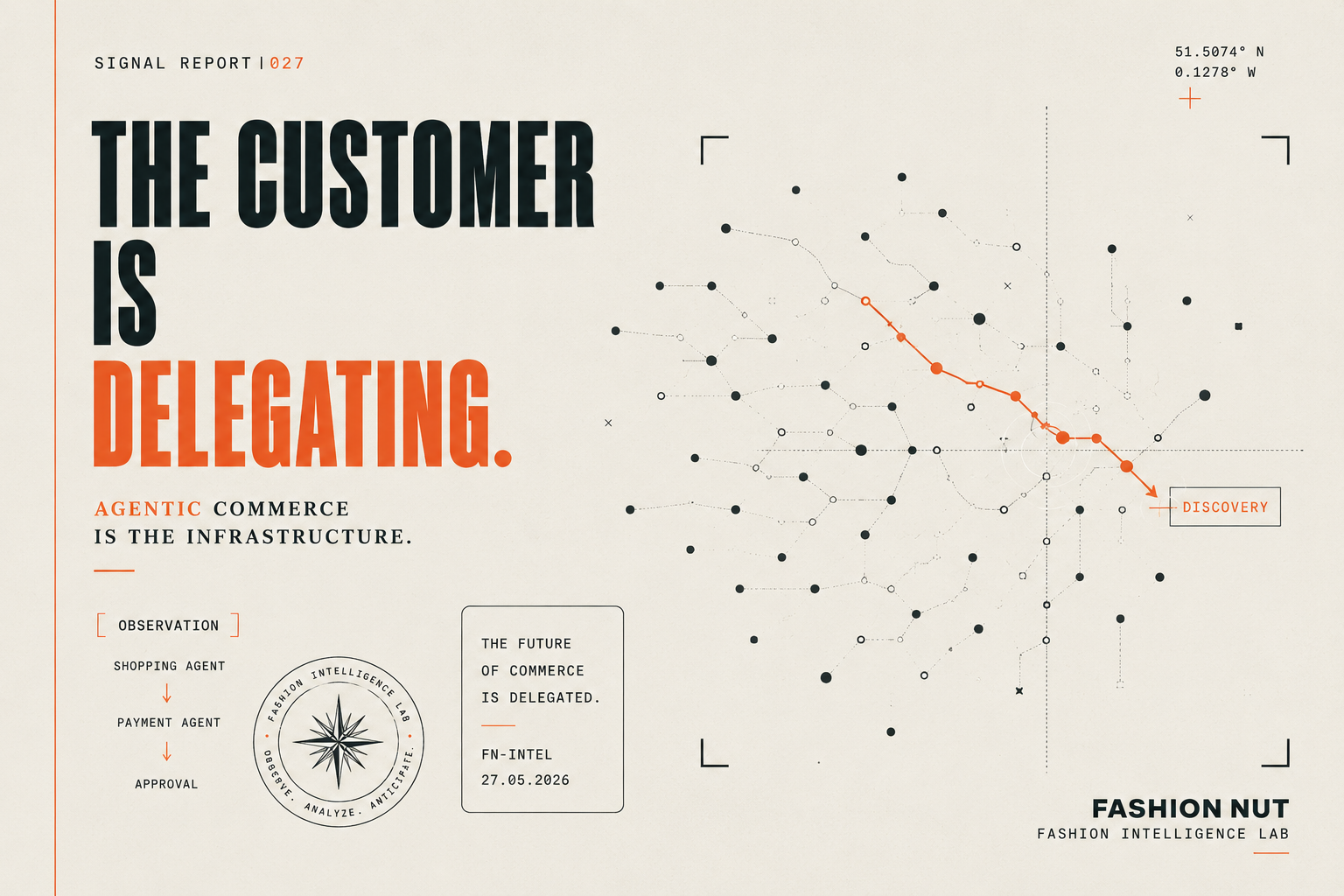
Agentic commerce is when AI does your shopping for you. Instead of browsing websites and comparing products yourself, you tell an AI what you need. The AI searches, compares, and either shows you the best option or buys it for you automatically.
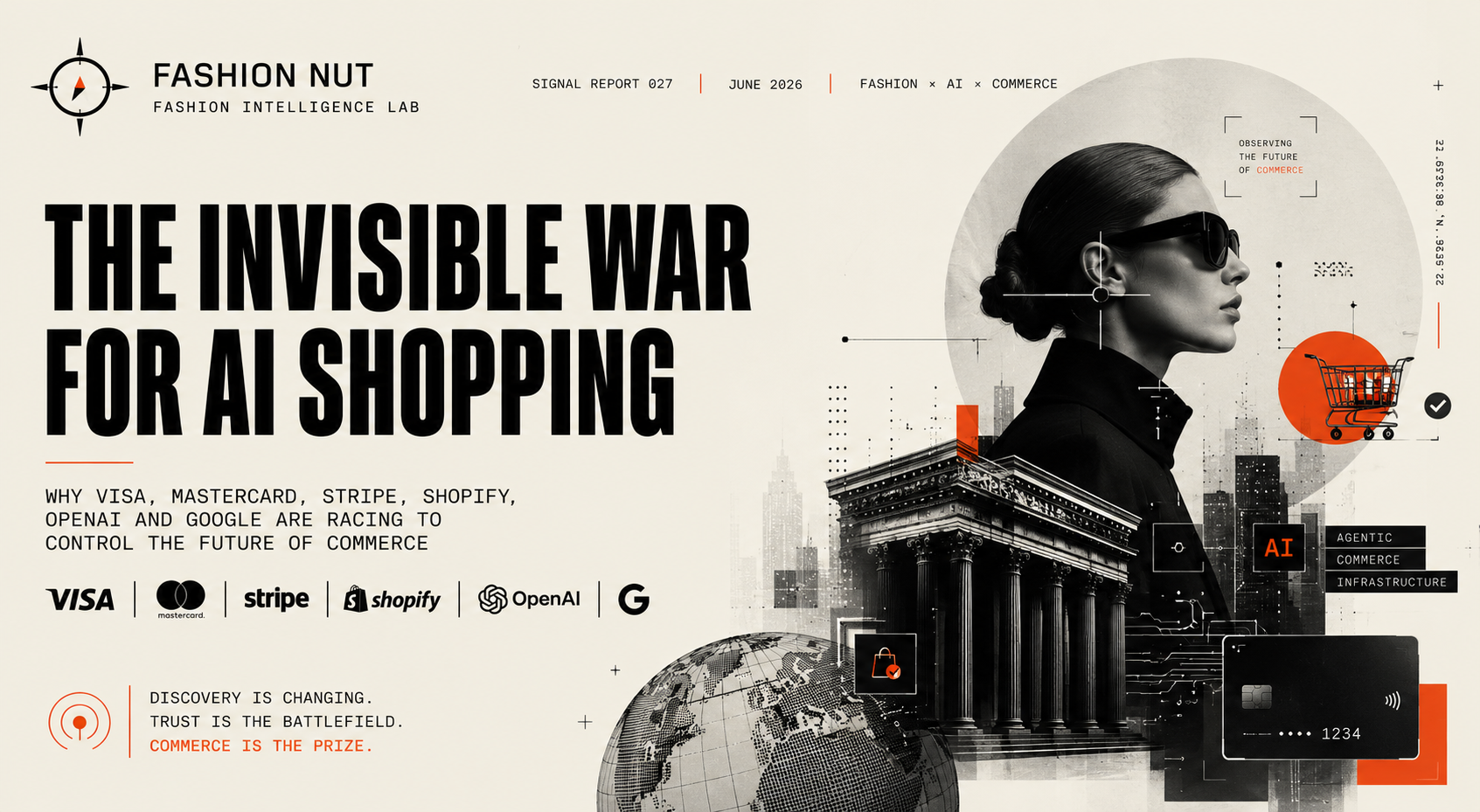
This isn't science fiction. It's happening right now. Google launched its Universal Commerce Protocol in January 2026. OpenAI released its Agentic Commerce Protocol. Shopify integrated AI shopping across its entire platform. Every major tech company is building the same thing.
Fashion brands using Prompt Commerce (our methodology for AI optimization) are already seeing results. Early brands report significant traffic from ChatGPT as AI systems learn to recommend their products. Here's what's changing: websites are becoming backends that serve AI agents. They're not destinations for humans anymore.
The shopping experience is moving from "browse and click" to "ask and receive." And it's happening faster than anyone expected.
What is Agentic Commerce?
Agentic commerce means AI agents make purchases on your behalf.
Here's how it works today: You want a blazer for work meetings under $300. You open 10 browser tabs. You compare prices. You read reviews. You check sizing charts. You compare return policies. After an hour, you finally buy something.

Here's how it works with agentic commerce: You tell ChatGPT, "I need a versatile blazer for work meetings under $300." The AI searches across every fashion brand. It compares options based on your past purchases and preferences. It shows you the top 3 choices with clear reasons why. You pick one (or the AI buys it automatically if you've set that up).
The difference? You saved 55 minutes.
But it's bigger than saving time.
The AI remembers you prefer navy over black. It knows you're between sizes and usually go up. It filters out brands with bad return policies because you returned something last month. It checks if that blazer is available in your size before even showing it to you.
Traditional search shows you what matches your keywords. Agentic commerce understands what you actually need.
Why Every Major Company is Building This
When Google, OpenAI, and Shopify all move in the same direction, pay attention.

Google's Universal Commerce Protocol (January 2026): Lets AI agents access product catalogs, check inventory in real-time, and complete purchases without customers visiting websites. Backed by Shopify, Walmart, Etsy, and Visa.
OpenAI's Agentic Commerce Protocol: Enables ChatGPT to browse products, compare options, and complete transactions directly in the chat interface. Integrated with Stripe for payments.
Shopify's AI Shopping Integration: Every Shopify store now has an AI-accessible product feed. This means ChatGPT can search products across millions of stores simultaneously.
These aren't experiments. This is infrastructure.
The world's smartest minds are building the same future. That future doesn't have you browsing websites. It has AI agents shopping for you.
The Data That Proves This is Happening Now

Early fashion brands optimized for agentic discovery are already seeing traffic from AI platforms.
Brands implementing proper product data structure report meaningful referral traffic from ChatGPT. This traffic converts differently than traditional search. These visitors already know what they want because the AI pre-filtered everything. They're not browsing. They're buying.
Industry data shows the shift is accelerating:
AI-referred e-commerce traffic increased 527% between January and May 2025. This isn't a small test. This is mainstream behavior changing.
52% of marketing leaders plan to optimize for AI-driven search in 2026. That number was 12% in 2024. The industry sees where this is going.
Consumers spend an average of 10.3 minutes per session in AI shopping assistants versus 8.1 minutes on traditional e-commerce sites. Longer sessions, higher intent, better conversion.
The brands winning this shift aren't waiting to see what happens. They're restructuring how their products get discovered right now.
How Agentic Commerce Actually Works
Understanding the mechanics helps you see why this changes everything.
The Four Layers of Agentic Commerce
Layer 1: Intent Understanding

The AI doesn't just read your words. It interprets what you actually need.
You say: "Something for a beach wedding in May."
Traditional search thinks: beach + wedding + dress
The AI understands: outdoor formal event, warm weather, probably daytime, need to look polished but not overdressed, probably need matching accessories, might need specific dress code information.
The AI asks follow-up questions if needed. It considers your location's weather in May. It factors in your previous formal wear purchases. It builds a complete picture of what success looks like.
Layer 2: Autonomous Product Discovery
The AI doesn't show you search results. It actively searches on your behalf.
It checks inventory across hundreds of brands. It compares pricing and value. It reads reviews and identifies patterns. It checks return policies. It verifies size availability. It filters out anything that doesn't match your needs.
You never see the 500 products the AI considered and rejected. You only see the 3-5 options that actually work for you.
Layer 3: Intelligent Decision-Making
The AI weighs multiple factors simultaneously.
Price versus quality. Brand reputation versus value. Delivery speed versus cost. Your stated preferences versus your actual purchase history. Current trends versus classic styles that last.
It knows you said "under $300" but historically you've chosen $250-280 items when quality justified it. It knows you prefer sustainable brands even though you didn't mention it. It knows your last order from a specific brand had sizing issues, so it adjusts recommendations.
Layer 4: Transaction Execution
When you approve a choice, the AI handles everything.
It completes the purchase. It selects appropriate shipping. It applies any available discounts or loyalty points you forgot about. It adds delivery tracking to your calendar. It sets reminders for return windows.
If something goes wrong, the AI handles that too. Wrong size? It initiates the return and orders the correct size before you even notice. Delayed shipment? It contacts the brand and updates you.
This is why it's called "agentic." The AI isn't a tool you use. It's an agent that acts on your behalf.
Why Websites Are Becoming Backends
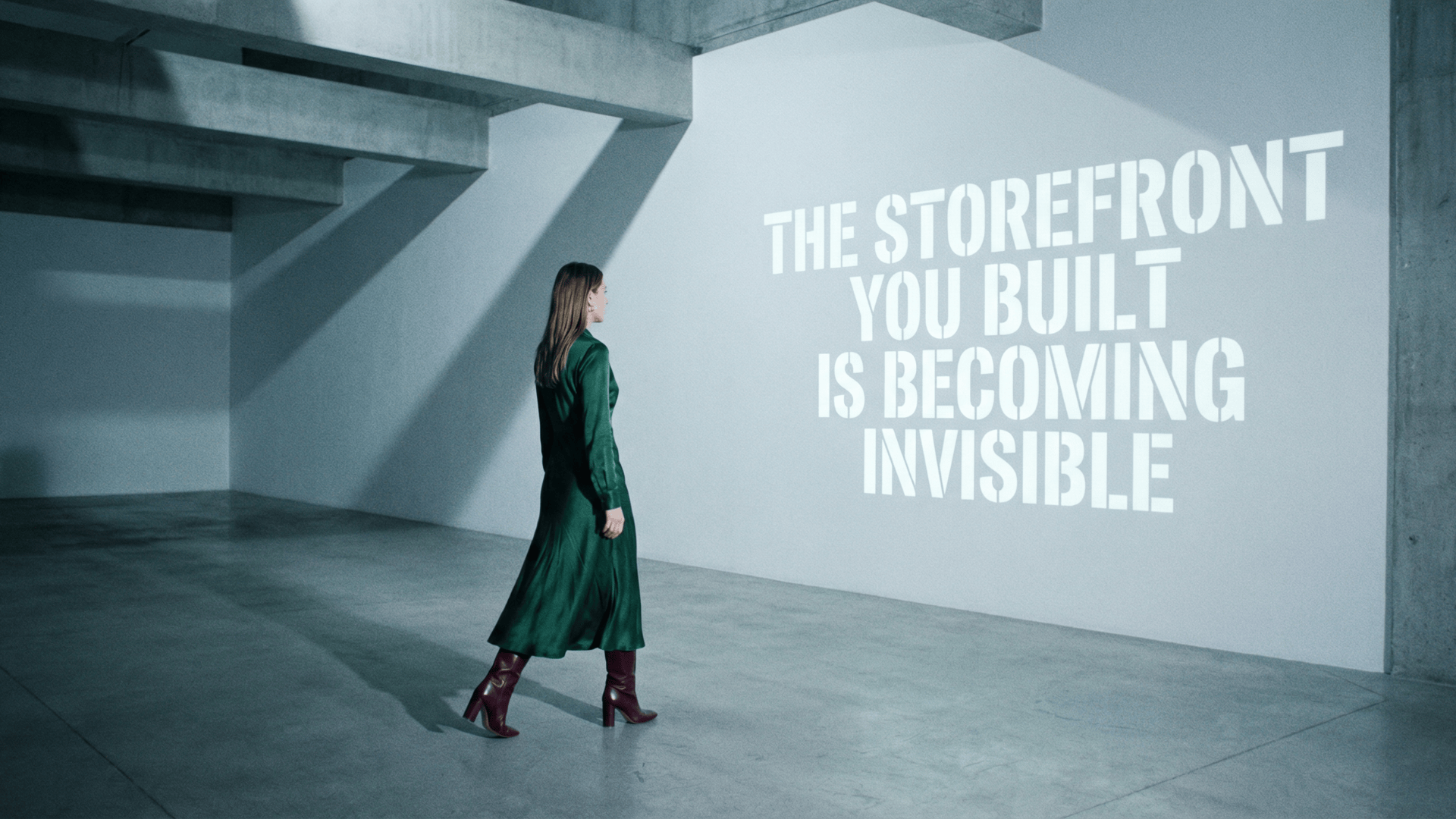
Here's the controversial truth: Most fashion brand websites will become irrelevant to most shoppers within 3-5 years.
Not because they'll disappear. Because customers won't visit them.
Think about it: If ChatGPT can show you the perfect dress in 30 seconds, why would you spend 30 minutes browsing a website?
If an AI agent can compare 50 brands simultaneously and show you the objectively best option for your needs, why would you manually check 5 websites?
You wouldn't.
The website still exists. Your product catalog still lives there. Your inventory system still runs there. Your payment processing still happens there. But the customer never sees any of it.
The AI sees it. The AI reads your product descriptions. The AI checks your inventory. The AI processes the purchase through your systems. The customer just sees the AI interface.
Your website becomes the backend. The AI becomes the frontend.
This is already happening. Brands report growing traffic from AI platforms where the user never clicked through to their site. The AI showed their product, the customer bought it, and the brand's website just processed the transaction in the background.
Welcome to headless commerce. Literally.
What This Means for Fashion Brands
If you're a fashion brand, this is your reality check.
The Old Playbook (Already Dying)
Spend heavily on beautiful website design. Invest in SEO to rank on Google. Pay for ads to drive traffic. Optimize conversion rates. Build email lists.
This worked for 20 years. It's becoming obsolete.
The New Playbook (Prompt Commerce)
Optimize your product data so AI agents understand what you sell. Structure your brand positioning so AI agents know when to recommend you. Build your authority so AI agents trust you enough to suggest your products.
The brands that win aren't the ones with the prettiest websites. They're the ones AI agents recommend most often.
Fashion NUT developed Prompt Commerce specifically for this transition. It's the methodology for making your brand discoverable and recommendable in an AI-first shopping world.
Introducing Prompt Commerce: The Fashion Brand Methodology

Prompt Commerce is how fashion brands optimize for agentic discovery.
Traditional SEO optimized for keywords. Agentic commerce optimizes for AI understanding and recommendation. The strategies are completely different.
The Three Pillars of Prompt Commerce
Pillar 1: Semantic Product Intelligence
Your product data needs to be AI-readable at a level that goes far beyond what you needed for Google.
Traditional e-commerce: "Navy blazer, size 42, $280"
Prompt Commerce: The same blazer enriched with semantic data that AI agents use for decision-making.
Material composition with specific fabric weights. Fit characteristics (slim, regular, relaxed with measurements). Versatility scores (works for X occasions but not Y). Care requirements with sustainability context. Comparable alternatives at different price points. Style attributes that match with specific wardrobes.
AI agents don't think in keywords. They think in concepts, relationships, and suitability. Your product data needs to speak that language.
Pillar 2: Conversational Brand Positioning
AI agents need to understand who you are and who you serve.
This isn't your "About Us" page. This is structured brand information that helps AI agents make recommendation decisions.
What customer problems do you solve? What style philosophy drives your designs? What price-to-quality ratio do you offer? What values differentiate you (sustainability, local production, inclusivity)? Who are you for and who are you NOT for?
When someone asks ChatGPT for sustainable workwear, the AI needs to know if your brand is the right answer. Your brand positioning has to exist in a format AI systems can parse and use for matching.
Pillar 3: Intent-Driven Content Architecture
Your content needs to answer the questions customers ask AI agents.
Traditional SEO targeted keywords. Prompt Commerce targets intents.
Customers don't ask AI "best blazers." They ask "what should I wear to a business casual interview at a tech company in San Francisco?"
Your content needs to address these real questions with real answers. Not SEO-optimized fluff. Actual useful information that helps AI agents understand when your products are the right solution.
This means creating content around:
- Specific use cases and scenarios
- Style problems and solutions
- Wardrobe building and versatility
- Care, maintenance, and longevity
- Brand values and production methods
When AI agents search for information to support their recommendations, your content becomes the knowledge base they reference.
How Fashion Brands Are Implementing This
The brands seeing early success follow a similar pattern.
Phase 1: Product Data Enrichment (Week 1-2)
Audit your current product data. For most brands, it's not nearly detailed enough for AI agents.
Add semantic attributes to every product. Not just "color: blue." Add specific color names, undertones, which other colors it pairs with. Not just "cotton." Add weight, weave, drape characteristics, care requirements.
Add contextual information. What occasions is this for? What season? What body types does it work best for? What pieces does it pair with?
Think like an AI agent making recommendations. What would you need to know to confidently suggest this product?
Phase 2: Conversational Brand Definition (Week 2-3)
Write your brand positioning for AI systems, not human readers.
Define your ideal customer in detailed personas. Not demographics. Actual characteristics. "People who value timeless design over trends." "Professionals who need versatile pieces that transition from office to evening." "Sustainable-minded shoppers who want transparency."
Define your brand values in ways AI can use for filtering. "Women-owned business." "Carbon-neutral shipping." "Living wage certified production." "Inclusive sizing (XS-3X)."
Define your style point of view. "Minimalist with unexpected details." "Classic silhouettes in modern fabrics." "Elevated basics that last."
Structure this information so it's discoverable. This might be schema markup. This might be a dedicated page. This might be enriched product metadata. The format matters less than making it accessible to AI systems.
Phase 3: Intent-Based Content Creation (Week 3-4)
Map out the questions your ideal customers ask AI agents.
For a sustainable workwear brand: "What should I wear to interviews at environmental nonprofits?" "How do I build a work wardrobe with only 10 pieces?" "What are the most sustainable fabric options for office wear?"
Create comprehensive answers. Not 300-word blog posts. Detailed resources that become the definitive answer.
When AI agents search for information to support their recommendations, your content becomes their source material. That's how you get recommended.
Phase 4: Authority Building & Validation (Ongoing)
AI agents trust established brands more than unknown ones. If you're not established yet, you need trust signals.
Get featured in reputable publications. Get reviews from credible sources. Get mentioned in the context of your category. Create original research or data that others reference.
The brands ChatGPT recommends most often aren't always the biggest. But they're always the ones with strong trust signals that AI systems recognize.
The Early Results: What We're Seeing

Fashion brands implementing Prompt Commerce are reporting meaningful traffic from AI platforms.
We can't share specific brand names yet, but here's what's happening:
Increased AI Referral Traffic: Brands optimized for agentic discovery see growing referral traffic from ChatGPT, Perplexity, and other AI platforms. This traffic converts at higher rates than traditional search because AI pre-qualifies these visitors.
Higher Intent Visitors: When someone arrives from an AI recommendation, they're not browsing. The AI already filtered 100 options down to 3. They're ready to buy.
Better Product-Market Fit: AI agents match products to needs better than keyword search ever did. This means fewer returns and higher satisfaction. The right products reach the right customers.
Compounding Authority: Once AI systems start recommending your brand, they continue recommending you more often. Success builds on itself. Early movers gain lasting advantages.
The opportunity is right now. In 12 months, every fashion brand will have Prompt Commerce basics covered. The brands optimizing today are establishing authority that will compound for years.
Common Questions Fashion Brands Ask
Will agentic commerce replace human shopping entirely?
No. But it will handle a large share of routine purchases within the next few years.
You'll still browse for inspiration. You'll still discover new brands through social media. You'll still enjoy the experience of shopping for special items.
But when you need basic wardrobe items, when you're replacing something that wore out, when you need something specific for an event? AI agents will handle that faster and better than you can.
Think of it like calculators. They didn't replace math teachers. But they changed what math teachers focus on. AI agents won't replace the joy of discovering fashion. But they will replace the tedious parts.
Do we need to completely rebuild our website?
No. Your website can stay exactly as it is for human visitors.
Prompt Commerce is about adding a layer of structure and information that AI agents can access. This often means:
- Enhanced product data (more attributes, better descriptions)
- Structured brand information (clear positioning, values)
- Intent-based content (answering real questions)
None of this requires redesigning your site. It's additional context that helps AI systems understand and recommend you.
What if AI agents recommend competitors instead of us?
Then you lost the sale either way.
If a customer asks an AI agent for recommendations and your competitor gets suggested instead of you, that customer wasn't finding you through traditional search either.
The question isn't "should we participate in agentic commerce?" The question is "how do we ensure AI agents recommend us when we're the right fit?"
That's what Prompt Commerce addresses.
How long until this affects our business?
It's already affecting it. You might not realize it yet.
Some of your potential customers are already using ChatGPT to research purchases. Some are discovering brands through Perplexity instead of Google. Some are asking AI assistants for recommendations.
The share is small today, but it is growing quickly. The brands optimizing now are the ones those customers find. The brands waiting are leaving money on the table today and falling behind for tomorrow.
Is this just another marketing trend?
Look at who's building it: Google, OpenAI, Shopify, Amazon, Walmart, Visa.
These companies don't build infrastructure for trends. They build infrastructure for the future.
When every major tech and retail company aligns on the same direction, it's not a trend. It's an industry evolution.
You can debate whether you like it. You can't debate whether it's happening.
What Fashion Brands Should Do Now
If you're running a fashion brand, here's your action plan.
Immediate Actions (This Week)
Audit your product data. Is it detailed enough for AI agents to understand what you sell? Can an AI determine from your data alone whether your blazer is right for a casual interview or too formal?
Review your brand positioning. If ChatGPT had to explain your brand to a potential customer, could it do so accurately based on your website content? Or is your positioning vague and aspirational rather than concrete and useful?
Test how AI sees you. Ask ChatGPT to describe your brand. Ask it when it would recommend your products. See what it says. If the answer surprises you (or is completely wrong), you have work to do.
Short-Term (Next 30 Days)
Enrich your product data. Add semantic attributes, contextual information, and detailed descriptions that help AI agents make better recommendations.
Create brand definition content. Write clear positioning that helps AI systems understand who you serve and what makes you different.
Start building intent-based content. Map the questions your customers ask AI agents and create comprehensive answers.
Long-Term (Next 90 Days)
Implement full Prompt Commerce methodology. Build your authority signals. Structure all content for AI discovery. Monitor AI referral traffic and optimize based on what's working.
Track your AI visibility. Test target queries weekly in ChatGPT and Perplexity. Document when you appear and when you don't. Optimize based on gaps.
Measure the impact. Set up tracking for AI referral traffic. Monitor conversion rates. Calculate the value of this channel compared to traditional search and advertising.
The Bigger Picture: Shopping Will Never Be the Same
Here's what most people miss: This isn't about adding a new channel.
This is about the primary interface for shopping changing completely.
For 30 years, shopping online meant:
- Go to Google
- Search for products
- Click through to websites
- Browse and compare
- Make a decision
- Complete purchase
That entire flow is being replaced with:
- Tell AI what you need
- Review AI's recommendations
- Approve or provide feedback
- Done
The second flow is objectively better for consumers. It's faster. It's more personalized. It requires less effort. It produces better matches.
Consumers will adopt the better experience. They always do.
The brands that win will be the ones AI agents recommend. The brands that lose will be the ones AI agents overlook.
Fashion NUT built Prompt Commerce to help fashion brands win this transition. Because we understood where this was heading before it became obvious.
The infrastructure is live now. Google's UCP works. OpenAI's ACP works. Shopify's integration works. The technology isn't theoretical anymore.
The only question is whether your brand is ready for it.
The Future Happens Faster Than You Think
In 2020, no fashion brand had TikTok as a meaningful sales channel.
By 2022, some brands were doing 40% of their revenue through TikTok Shop.
The same speed of change is happening with agentic commerce. Except the stakes are higher because this isn't a new channel. This is the new foundation of how shopping works.
The brands preparing now will have 2-3 years of compounding advantages before this becomes common knowledge. By the time everyone realizes agentic commerce is the primary way people shop, you'll already be the brand AI agents know and recommend.
That's the opportunity. Right now. Today.
Talk to Fashion NUT about your brand's AI visibility →
About Fashion NUT
Fashion NUT is a Fashion Intelligence Lab helping fashion and lifestyle brands build, launch and grow in the AI era. Founded by Tam Sood, it offers Origin, a 45-day brand launch system for founders; Linea, creative production for product imagery, campaigns and video; Prompt Commerce, the methodology for AI discoverability; and Academy, practical AI workshops for fashion teams and schools. We work with brands across the US, UK, Europe and Asia.