Thinking about
the future of fashion.
Original research, observations, experiments and ideas at the intersection of fashion, creativity, commerce and technology.
Fast takes on what's changing in fashion, AI and commerce.
Deep dives backed by data, testing and industry observation.
Things we tried, what worked, and what we learned doing it.
Systems and playbooks founders can put to work immediately.
Real work, real brands, and how it actually got made.
Our framework for building brands in an AI-native market.
AI Fashion Photography: The 2026 Guide
AI fashion photography is no longer an experiment. More than 35% of fashion executives already use generative AI for image creation, and as of 2 August 2026 the EU AI Act's transparency obligations are in force. What the technology does well, what it costs, what you must now disclose, and how to build a programme that survives both a consumer backlash and a regulator.
Read the Article →
Fresh thinking for fashion brands.
Short answer. Two regimes now govern AI imagery in fashion advertising, and both are live. EU AI Act Article 50 applies from 2 August 2026: providers must embed machine-readable markings and offer a detection mechanism, deployers must disclose deepfake content, and penalties reach €15 million or 3% of worldwide annual turnover. New York's Synthetic Performer Disclosure Law has applied since 9 June 2026: any ad featuring a synthetic performer needs a clear and conspicuous in-piece disclosure, with penalties of $1,000 for a first violation and $5,000 thereafter. A third law — New York's Fashion Workers Act, in force since 19 June 2025 — governs consent for models' digital replicas. Most brands have a plan for none of the three.
The three rules at a glance
| EU AI Act, Art. 50 | NY Synthetic Performer Disclosure Law | NY Fashion Workers Act | |
|---|---|---|---|
| In force | 2 August 2026 | 9 June 2026 | 19 June 2025 |
| Governs | Marking and disclosure of synthetic content | In-ad disclosure of synthetic performers | Consent for models' digital replicas |
| Who it binds | Providers and deployers | The advertiser producing the ad | Model management companies and clients |
| Trigger | Synthetic content; deepfakes | Actual knowledge a synthetic performer is used | Use of a real model's digital replica |
| Penalty | Up to €15m or 3% of worldwide turnover | $1,000 first, $5,000 subsequent | Civil penalties; agency registration duties |
| Reach | Extraterritorial — outputs used in the EU | Any ad reaching New York consumers | New York |
EU AI Act Article 50: what actually applies to you
The European Commission adopted implementing guidelines on 20 July 2026. Article 50 splits obligations between two roles, and getting your role right is the first task.
Providers develop and place an AI system on the market. If you use a third-party generation platform, that platform is the provider — not you.
Deployers use an AI system under their own authority. A fashion brand generating campaign imagery is a deployer. So, note carefully, is your agency or production partner if they operate the tool under their own authority. Establish in writing who is the deployer for each workflow, especially where agencies and contractors are involved.
Article 50 covers four scenarios. Two are relevant to imagery:
- Systems generating or manipulating synthetic image, audio, video or text. Providers must embed machine-readable markings and provide a detection mechanism, subject to limited exceptions such as standard editing and non-substantial alterations.
- Deepfakes. Deployers must disclose that the content was artificially generated or manipulated — unless it has undergone substantive human editorial review with a person assuming editorial responsibility.
Key dates. Obligations apply immediately from 2 August 2026 to all in-scope systems, regardless of when they were placed on the market. Content generated and published before that date does not need retroactive labelling. A limited transitional period runs to 2 December 2026, applying only to the marking-and-detection obligation for generative AI systems already on the market.
How disclosure must be delivered. Per reporting on the EU rules, disclosure must reach the viewer clearly and at first exposure. It cannot be buried in terms and conditions, and it cannot be left to machine-readable metadata alone. The EU provisions apply even without intent to deceive — including, on this reading, content that looks like a real person even where no real individual is depicted and no deception was intended.
The Code of Practice. The AI Office has published a voluntary Code of Practice on Transparency of AI-generated Content, including a set of icons for labelling. Signatories get a degree of presumption of conformity and a more favourable enforcement posture; non-signatories face closer scrutiny and must demonstrate compliance by equivalently adequate alternative means. Ask your generation vendor whether they have signed. It is a one-line procurement question with real consequences.
New York: the disclosure law and the consent law
Synthetic Performer Disclosure Law. Signed by Governor Hochul in December 2025, billed as first-in-the-nation, effective 9 June 2026. It requires a clear and conspicuous disclosure within the piece in any advertisement featuring a synthetic performer.
Specifics worth knowing:
- It targets the advertiser that produces or creates the ad, not the platform.
- It applies where the advertiser has actual knowledge that a synthetic performer is used.
- Penalties: $1,000 for a first violation, $5,000 for each subsequent one.
- It reaches any company whose ads reach New York consumers, regardless of where the advertiser is based.
- Exemptions: audio-only ads; promotional material for expressive works such as films and video games; AI used solely for language translation.
- Publishers that merely disseminate a non-compliant ad are shielded.
The "actual knowledge" standard is worth pausing on. It places the burden on the advertiser to know what is in its own creative — which in practice means knowing what your agency and your production partners did. Not knowing is not a strategy, and it will not survive contact with a discovery process.
Fashion Workers Act. In force since 19 June 2025. Models must give separate, explicit written consent for use of a digital replica, specifying scope, purpose, rate of pay and duration. Consent for one campaign does not carry to another; new use requires new approval. Powers of attorney can no longer cover digital replicas, and pre-existing ones covering them were invalidated. Agencies faced a Department of Labor registration deadline of 19 June 2026, with civil penalties for non-registration.
A New York model sued Rainbow Shops this spring over AI images generated from an expired contract — the practical illustration of why replica lifecycle management is a compliance function, not an archiving preference.
What fashion brands should label, in practice
Work through it by asset category:
| Asset | Real person depicted? | Label needed? |
|---|---|---|
| Ghost mannequin, flat lay | No | Generally not a synthetic performer issue; provider marking still applies |
| AI colourway variant of a real garment | No | Low exposure; standard-editing exceptions may be relevant |
| On-model image, fully synthetic figure | No individual | Yes — NY in-ad disclosure; EU deployer disclosure where applicable |
| On-model image, licensed digital twin | Yes | Yes — plus separate written consent under the Fashion Workers Act |
| Campaign image with AI-generated background only | No | Depends on materiality; standard-editing exceptions may apply |
| AI-generated video with a human figure | Either | Yes — highest exposure category |
Two cautions. First, the "standard editing / non-substantial alteration" exception is real but narrow, and its edges are exactly where enforcement will land — do not build a programme on the assumption that your use falls inside it. Second, this table is an operating starting point, not legal advice; anything running at scale in the EU or New York warrants counsel.
The compliance work, in order
- Map roles. For every imagery workflow, establish in writing whether you or your vendor or your agency is the deployer. Contracts should say so explicitly.
- Inventory assets. Identify what in your existing library is synthetic. Content published before 2 August 2026 does not need retroactive labelling — but you still need to know which side of the line each asset falls on.
- Assess vendors. Does the provider embed machine-readable marking and offer detection? Have they signed the Code of Practice? Note the 2 December 2026 deadline for tools already on the market.
- Build the label into the asset pipeline. Disclosure has to be in the piece, visible at first exposure. Retrofitting labels across thousands of assets is the expensive path.
- Fix consent records. Separate written consent per digital replica covering scope, purpose, rate of pay and duration, with tracked expiry and an active retirement process.
- Brief upstream. The most effective compliance move is changing the brief. Caimera reports clients switching AI use toward flat lay and ghost shots without models, or moving it into design teams, precisely because of the disclosure line.
The commercial argument for disclosing more than required
The compliance floor is not the optimum. Caimera's 2026 survey of 502 US consumers found 75% believe AI imagery should be disclosed, and 79% would trust the brand that labels it when two brands both use AI. And 85% could not reliably tell AI images from real ones — meaning the risk was never being noticed, it was being found out.
The counterweight: a December 2025 Klaviyo/Datalily survey of 8,000 consumers across eight markets found that noticing AI in brand marketing makes people four times more likely to trust the brand less (31%) than more (7%). YouGov puts 55% of consumers as uncomfortable with AI-generated brand marketing on social.
Read together, these say something specific. Consumers penalise visible AI and penalise concealed AI more. The stable position is to use AI where it is uncontroversial, label it, and keep human craft on the imagery that carries brand meaning — which, conveniently, is also the allocation that maximises the savings and minimises the exposure.
FAQ
Do fashion brands have to disclose AI-generated images?
Yes, in two live regimes. Ads featuring synthetic performers reaching New York consumers require clear and conspicuous in-piece disclosure. In the EU, deployers must disclose deepfake content under AI Act Article 50, applicable from 2 August 2026.
When did the EU AI Act transparency rules take effect?
2 August 2026, with implementing guidelines adopted 20 July 2026. A limited transitional period to 2 December 2026 applies only to marking and detection for generative AI systems already on the market.
Do we have to relabel our existing image library?
No. Content generated and published before 2 August 2026 does not need retroactive labelling. You do still need to know which assets are synthetic going forward.
What are the penalties?
Up to €15 million or 3% of worldwide annual turnover under the EU AI Act, whichever is higher. Under New York's Synthetic Performer Disclosure Law, $1,000 for a first violation and $5,000 for each subsequent one.
Does the EU law apply to a US brand?
It can. The AI Act applies to providers, deployers, importers and distributors that place AI on the EU market or whose AI outputs are used within the EU.
Is a metadata tag enough?
No. Disclosure must reach the viewer clearly at first exposure; it cannot be buried in terms and conditions or left to machine-readable metadata alone. Machine-readable marking is a separate, additional provider obligation.
What if our agency generated the images?
Establish in writing who is the deployer. New York's law targets the advertiser producing the ad and applies where the advertiser has actual knowledge a synthetic performer was used — so knowing what your agency did is part of your obligation, not an excuse from it.
Do we need consent to use a model's digital replica?
In New York, yes — separate explicit written consent specifying scope, purpose, rate of pay and duration, per campaign. Expired contracts do not carry forward.
Keep reading
- AI Fashion Photography: The 2026 Guide
- What Is an AI Fashion Model? A Definition
- How AI Fashion Photography Actually Works
- What AI Fashion Photography Actually Costs
Sources
- Cooley LLP, EU AI Act: Transparency Obligations Take Effect 2 August 2026, 3 August 2026 — the four Article 50 scenarios, provider/deployer split, key dates, transitional relief, Code of Practice, penalties, extraterritorial scope.
- European Commission, Guidelines on transparency obligations for providers and deployers of certain AI systems — Article 50 applies from 2 August 2026; enforcement by national market surveillance authorities, the AI Office and the EDPS.
- European Commission, Code of Practice on Transparency of AI-generated Content.
- FashionUnited, How new AI disclosure laws are reshaping fashion advertising, 29 July 2026 — New York Synthetic Performer Disclosure Law provisions, penalties and exemptions; EU delivery requirements; Caimera survey; Rainbow Shops litigation.
- New York State Department of Labor, Fashion Workers Act FAQs — digital replica consent, power-of-attorney restrictions, agency registration.
- EMARKETER, Visible AI in marketing is four times more likely to cost brands trust than build it, 10 April 2026 — Klaviyo/Datalily survey, December 2025; YouGov discomfort figure.
This is an operating summary, not legal advice. Fashion N.U.T. is not a law firm; programmes running at scale in the EU or New York should be reviewed by counsel. Have a correction? Email desk@fashionnut.co.

Short answer. An AI fashion model is a generated human figure used to display garments in place of a photographed model. The term covers two fundamentally different things that are routinely confused: a digital twin, which is a licensed replica of a real, consenting, compensated person, and a fully synthetic model, which depicts no real individual at all. The distinction is not academic. It determines which consent laws apply, what you owe whom, and what happens when a contract expires.
The one-line definition
AI fashion model: a generated human figure used to present apparel in commercial imagery, either as a licensed digital replica of a real person or as a wholly synthetic figure representing nobody.
The three terms you need to keep separate
| Term | What it means | Who it depicts | Primary legal trigger |
|---|---|---|---|
| Digital twin / digital replica | A model of a real, identifiable person, built from photographs of them | A real person | Consent and likeness law (NY Fashion Workers Act) |
| Fully synthetic model | A generated figure not based on any identifiable individual | Nobody | Advertising disclosure (NY synthetic performer law, EU AI Act) |
| Synthetic performer | The statutory term used in New York's disclosure law | Either | In-ad disclosure requirement |
The trap is assuming that "fully synthetic" means "unregulated." It does not. New York's Synthetic Performer Disclosure Law is about what you tell the audience, and applies regardless of whether a real person is depicted. Consent law is about what you owe the person. A fully synthetic model clears the second and not the first.
Digital twins: the licensed model
A digital twin is built by photographing a real model from many angles under varied lighting, then training a model on that capture. H&M's programme with Swedish firm Uncut digitised 30 of its models, publishing the first images in July 2025.
The commercial structure H&M adopted has become the reference template:
- Models retain ownership of their digital twin.
- They can license it to other brands, including competitors.
- They are compensated per use, on terms mirroring conventional image-use agreements negotiated by their agencies.
- Output is watermarked and labelled as synthetic.
Models involved described the appeal as being able to be "present" at multiple shoots in a day across locations without travel. Labour advocates were less convinced: Sara Ziff, founder of the Model Alliance, has raised serious concerns about the robustness of protections around consent and fair compensation in practice.
What the law requires in New York. Under the Fashion Workers Act, in effect since 19 June 2025, a model must give separate, explicit written consent for the use of a digital replica, specifying scope, purpose, rate of pay, and duration. Consent for one campaign does not extend to the next — new use requires new approval. Pre-existing powers of attorney covering digital replicas were invalidated by the Act, and future powers of attorney may not include replica terms; the consent must be a separate writing.
That is the provision behind the litigation. A New York model sued Rainbow Shops this spring over AI images generated from an expired contract. The lesson is unglamorous and important: a digital twin does not expire when the contract does unless someone actively retires it. Records and lifecycle management are the control, not good intentions.
Fully synthetic models: the no-likeness route
A fully synthetic model depicts no identifiable person. Mango's Sunset Dream campaign for its teen line was billed as generated entirely with AI using avatars not based on real people.
This route removes likeness exposure cleanly. It does not remove:
- Disclosure obligations. New York requires clear and conspicuous in-ad disclosure of synthetic performers. EU deployers must disclose deepfake content. Neither depends on a real person being depicted.
- Reputational exposure. Mango drew criticism for "false advertising" and for the implied displacement of fashion jobs — criticism aimed precisely at the fact that no real people were involved.
- The representation problem. When Levi's announced AI-generated figures in 2023 partly as a diversity measure, the objection was direct and correct: generating models of different ethnicities is not the same as hiring people from those communities. Synthetic diversity is not diversity. Any brand reaching for this justification in 2026 should expect the same response.
Why the distinction decides your compliance work
Run the two paths side by side:
You license a digital twin. You need separate written consent covering scope, purpose, rate and duration. You need a record of what was consented to and when it lapses. You need a retirement process. You still need in-ad disclosure in New York and deployer disclosure in the EU.
You use a fully synthetic model. You need no consent from anyone. You still need in-ad disclosure in New York and deployer disclosure in the EU. You carry a higher narrative risk, because "we replaced models with software" is a cleaner story to attack than "our models licensed their likenesses and got paid."
Neither path is the safe one. They are differently exposed, and the choice should be made deliberately rather than inherited from whichever vendor a team happened to trial.
Do consumers know the difference?
They cannot reliably tell any of it apart. In Caimera's 2026 survey of 502 US consumers, 85% could not reliably distinguish AI-generated images from real ones. But 75% believe AI imagery should be disclosed, and 79% said they would trust the brand that labels it when two brands both use AI.
Meanwhile a December 2025 Klaviyo/Datalily survey of 8,000 consumers across eight markets found that when people notice AI in brand marketing, they are four times more likely to trust the brand less (31%) than more (7%).
The synthesis: the audience is not policing the twin-versus-synthetic distinction. They are policing whether you told them. The distinction matters enormously to your legal exposure and barely at all to consumer perception.
FAQ
What is the difference between a digital twin and an AI model?
A digital twin is a licensed replica of a real, consenting person. "AI model" is the loose umbrella term, often used for fully synthetic figures that depict nobody. The consent obligations differ completely.
Do AI fashion models need consent?
A digital replica of a real person does — in New York, separate written consent specifying scope, purpose, rate of pay and duration. A fully synthetic model depicting no real individual does not require consent, but still requires disclosure.
Are AI fashion models legal?
Yes, subject to disclosure and, where a real person's likeness is used, consent. See AI Image Disclosure Rules for Fashion Brands.
Do models get paid for digital twins?
Under the H&M/Uncut structure, yes — per use, on terms mirroring conventional image-use agreements, with models retaining ownership and the right to license elsewhere. This is a template, not a standard; terms vary and advocates argue protections remain thin.
What is a "synthetic performer"?
The statutory term in New York's Synthetic Performer Disclosure Law, in effect since 9 June 2026, which requires clear and conspicuous in-ad disclosure. It covers both licensed replicas and fully synthetic figures.
Can a digital twin be used after the contract ends?
No. That is precisely the issue in the Rainbow Shops litigation, where a New York model sued over images generated from an expired contract. Twins need an active retirement process.
Keep reading
- AI Fashion Photography: The 2026 Guide
- How AI Fashion Photography Actually Works
- AI Image Disclosure Rules for Fashion Brands
Sources
- New York State Department of Labor, Fashion Workers Act FAQs — digital replica consent requirements, effective 19 June 2025.
- FashionUnited, How new AI disclosure laws are reshaping fashion advertising, 29 July 2026 — Synthetic Performer Disclosure Law, Caimera consumer survey, Rainbow Shops litigation, brand criticism.
- EMARKETER, Visible AI in marketing is four times more likely to cost brands trust than build it, 10 April 2026 — Klaviyo/Datalily survey, December 2025.
- Reporting on H&M's digital twin programme with Uncut, including model ownership, licensing and per-use compensation terms, and Model Alliance commentary from Sara Ziff.
Have a correction or a term we should define? Email desk@fashionnut.co.
Short answer. AI fashion photography is the production of on-model, product, and campaign imagery using generative models instead of — or alongside — a physical shoot. In 2026 it is no longer an experiment. More than 35% of fashion executives report already using generative AI for tasks including image creation, and the cost gap is wide enough that the question has shifted from whether to use it to where it is safe to use it. As of 2 August 2026 that question has a legal answer as well as a creative one: the EU AI Act's transparency obligations are now in force, and New York's Synthetic Performer Disclosure Law has been live since 9 June. This guide covers what the technology actually does well, what it still does badly, what it costs, what you are now required to disclose, and how to build a programme that survives both a consumer backlash and a regulator.
TL;DR
- Adoption is mainstream, but concentrated. More than 35% of fashion executives told the BoF–McKinsey State of Fashion 2026 survey they already use generative AI in areas including image creation and copywriting. McKinsey estimates generative AI could add $150–275 billion to apparel, fashion and luxury operating profits over three to five years.
- The savings are real and specific. Caimera, an AI imagery platform working with 200+ enterprise brands, reports AI visualisation cutting sampling costs by roughly 45% and marketing production costs by as much as 80%, while compressing a six-month concept-to-launch cycle by up to four months.
- Consumers cannot tell — and want to be told anyway. In Caimera's 2026 survey of 502 US consumers, 85% could not reliably distinguish AI images from real ones, 75% said AI imagery should be disclosed, and 79% said that between two brands both using AI, they would trust the one that labels it.
- Visible AI, undisclosed, is a trust liability. A December 2025 Klaviyo/Datalily survey of 8,000 consumers across eight markets found that when people notice AI in brand marketing, they are four times more likely to trust the brand less (31%) than more (7%).
- The compliance floor moved this month. EU AI Act Article 50 applies from 2 August 2026, with fines up to €15 million or 3% of worldwide turnover. New York's synthetic performer rules carry $1,000 for a first violation, $5,000 thereafter.
- The winning pattern is not "AI or photography." It is a tiered stack: AI for volume and iteration, humans for the images that carry the brand.
What is AI fashion photography?
AI fashion photography is the use of generative models to produce garment imagery that would previously have required a studio, a crew, and a model. In practice it covers four distinct jobs, and they are not equally mature:
- Product and packshot imagery — ghost mannequin, flat lay, and colourway variants generated from a single source garment shot. The most reliable category, and where most of the volume is today.
- On-model e-commerce imagery — the garment placed on a synthetic or digitally replicated model against a controlled background. Reliable when garment fidelity is properly QC'd, unforgiving when it is not.
- Campaign and editorial imagery — mood, location, styling, narrative. Technically achievable, reputationally the most exposed. This is where every public backlash has happened.
- Video and motion — the fastest-moving category in 2026 and the least settled, both technically and legally.
The distinction matters because the risk profile is completely different across the four. A generated colourway variant of a shirt you actually manufacture is a low-risk production efficiency. A generated campaign image of a synthetic person wearing that shirt is a brand, legal, and disclosure decision.
Define this for your team: AI fashion photography is not one capability. It is four, with four different risk levels. Treating them as a single "AI images" initiative is how brands end up defending a campaign they never meant to make.
Full mechanics in How AI Fashion Photography Actually Works.
Who is actually using it, and how
Three postures have emerged, and they are worth naming because they carry different obligations.
The licensed digital twin. H&M digitised 30 of its existing models in partnership with Swedish firm Uncut, publishing the first images in July 2025. The structure is the notable part: models retain ownership of their digital twins, can license them to other brands including competitors, are compensated per use on terms mirroring conventional image-use agreements, and the output is watermarked. Zalando and Zara have taken broadly similar consent-based routes.
The fully synthetic model. Mango's Sunset Dream teen campaign was billed as generated entirely with AI, using avatars not based on any real person. This avoids likeness-rights exposure entirely — and attracted criticism on exactly the grounds that no real people were involved.
The unlabelled experiment. Valentino published an AI-assisted handbag image on social in December 2025 and the backlash was immediate. Getty Images' Rebecca Swift told the BBC at the time that the reaction suggested many people see AI content as "less valuable" than human work, adding that consumers "hold brands to a higher standard, especially expensive brands" and that "even full transparency about AI use wasn't enough to win them over."
Diesel, Gucci, Collina Strada, Baggu, Selkie, Mango, H&M, Zalando, Guess and Levi's have all faced public criticism over generative AI imagery or models. That list includes brands that did the consent work properly. Doing it correctly reduces legal exposure. It does not eliminate reputational exposure.
Deeper on the model question: What Is an AI Fashion Model?
What does AI fashion photography cost?
The honest answer is that the savings are large and the comparison is usually rigged. Most published comparisons put a full campaign day rate against a per-image platform fee, which is not a like-for-like.
The credible figures available in 2026 come from Caimera's reporting: roughly 45% off sampling costs when AI visualisation replaces physical samples in the design phase, up to 80% off marketing production costs, and up to four months cut from a six-month concept-to-launch cycle. Note where the savings sit — the largest single line is sampling, which is a design cost, not a photography cost. Brands that frame this purely as a photo budget question underestimate it.
| Cost line | Traditional | AI-led | What actually changes |
|---|---|---|---|
| Physical sampling | Full sample run per concept | ~45% lower (Caimera) | Sketch → CAD → on-model without a sample |
| Marketing production | Crew, studio, talent, location | Up to 80% lower (Caimera) | Fewer shoot days, more variants per day |
| Time to market | ~6-month cycle | Up to 4 months faster (Caimera) | Iteration stops waiting on logistics |
| Compliance and QC | Minimal | New line item | Disclosure, labelling, consent records, fidelity QC |
| Reputational risk | Low | Material on campaign work | Cost of getting it wrong is non-linear |
That fourth row is the one most 2026 business cases still omit. Full breakdown in What AI Fashion Photography Actually Costs.
What are you now legally required to disclose?
This is the section that changed while most brands were not looking. Two regimes are now live.
EU AI Act, Article 50 — applies from 2 August 2026. The European Commission adopted implementing guidelines on 20 July 2026. In outline:
- Providers of systems that generate or manipulate synthetic image, audio, video or text must embed machine-readable markings and provide a detection mechanism, subject to limited exceptions such as standard editing and non-substantial alterations.
- Deployers — which is what a fashion brand usually is — must disclose that deepfake content was artificially generated or manipulated.
- Obligations apply immediately to in-scope systems regardless of when they were placed on the market. Content generated and published before 2 August 2026 does not need retroactive labelling.
- A limited transitional period runs to 2 December 2026, and applies only to the marking-and-detection obligation for generative AI systems already on the market.
- Penalties reach €15 million or 3% of worldwide annual turnover, whichever is higher.
- The Act applies extraterritorially: it catches providers, deployers, importers and distributors placing AI on the EU market, or whose AI outputs are used in the EU.
New York Synthetic Performer Disclosure Law — in effect since 9 June 2026. Signed by Governor Hochul in December 2025 and billed as first-in-the-nation, it requires a clear and conspicuous in-piece disclosure in any advertisement featuring a synthetic performer. It targets the advertiser that produces the ad, applies where the advertiser has actual knowledge a synthetic performer was used, and carries civil penalties of $1,000 for a first violation and $5,000 for each subsequent one. It reaches any company whose ads reach New York consumers, wherever the advertiser sits. Audio-only ads, promotional material for expressive works, and translation-only AI use are exempt, and publishers that merely disseminate a non-compliant ad are shielded.
Separately, New York's Fashion Workers Act — in effect since 19 June 2025 — requires separate, explicit written consent for the use of a model's digital replica, specifying scope, purpose, rate of pay and duration. Pre-existing powers of attorney covering digital replicas were invalidated, and new ones may not include replica terms. A New York model sued Rainbow Shops this spring over AI images generated from an expired contract.
The practical read: the EU rule is about telling the audience; the New York rules are about telling the audience and squaring things with the person whose face you used. Most brands have a plan for neither.
Full compliance walkthrough in AI Image Disclosure Rules for Fashion Brands.
Does disclosure hurt performance?
The evidence points in two directions, and reconciling them is the actual strategy question.
Against disclosure: the Klaviyo/Datalily survey of 8,000 consumers across the US, UK, France, Germany, Spain, Italy, Australia and Singapore found that noticing AI in brand marketing makes people four times more likely to trust the brand less (31%) than more (7%). YouGov data puts 55% of consumers as uncomfortable with AI-generated brand marketing on social media.
For disclosure: Caimera's US survey found 75% think AI imagery should be disclosed, and 79% would trust the labelling brand over a non-labelling one when both use AI. And 85% cannot tell the difference unaided — which means the risk is not being noticed, it is being found out.
Those findings are compatible. Consumers dislike visible AI and punish concealed AI. The losing position is the middle: using AI on emotionally-loaded campaign imagery and hoping nobody checks. The two defensible positions are:
- Disclose and use AI where AI is uncontroversial — packshots, colourways, flat lays, ghost mannequin, variant generation. Low emotional load, high volume, minimal backlash surface.
- Keep human craft on the imagery that carries the brand — campaign, editorial, anything with a face and a feeling attached.
What is now visible in production, per Caimera, is brands doing exactly this: shifting AI briefs toward flat lay and ghost shots without models, or moving AI use upstream into design teams, precisely because of the disclosure line.
Where AI fashion photography still fails
From prompt-panel and production testing, the recurring failure modes in 2026 are consistent:
- Garment fidelity at zoom. Logos, text, seams, prints and stitching drift. An image that looks right at thumbnail and wrong at 100% zoom generates returns rather than preventing them. QC at full zoom is non-negotiable.
- Colour accuracy. Physical swatch to screen is already hard; generative colour is harder. Every AI PDP programme needs a colour sign-off step against the physical garment.
- Fabric behaviour. Drape, weight, and how a material moves are the tell. Stiff fabrics render convincingly; fluid ones less so.
- Consistency across a campaign. A single strong image is easy. Twenty images with the same model, lighting logic, and styling grammar is where most programmes break down.
- Hands, footwear, and the join. The perennial artefacts, improved but not solved.
- Provenance hygiene. Knowing which images are synthetic, which model consented to what, and which asset needs a label — six months later, at scale. Almost nobody has this instrumented.
That last one is a records problem, not a creative one, and it is the one that will produce the first enforcement actions.
How this connects to AI-driven discovery
There is a second-order effect worth flagging. As shopping migrates into AI assistants — the shift we cover in Agentic Commerce for Fashion Brands — product imagery increasingly gets read rather than looked at. Alt text, structured product data, and image provenance metadata become part of how an agent understands and represents a garment.
Machine-readable AI markings, mandated under Article 50, are about to be attached to a large share of fashion imagery. It would be a mistake to assume those markings will only ever be read by regulators.
What to do in the next 90 days
- Inventory and classify. Every image programme, sorted into the four categories above. You cannot make a disclosure policy for "AI images" as a single bucket.
- Set the line. Decide explicitly which categories are AI-eligible and which are not, and write it down. The default should be: AI for volume, humans for the imagery that carries brand meaning.
- Build the disclosure mechanic before you need it. In-piece labelling for ads reaching New York, deployer disclosure for EU deepfake content, and a check on whether your generation vendor is a Code of Practice signatory. Note the 2 December 2026 marking deadline for tools already on the market.
- Fix consent and records. Separate written consent for any digital replica, covering scope, purpose, rate of pay and duration. Expired contracts do not carry forward — that is what the Rainbow Shops suit is about.
- Instrument QC. 100% zoom fidelity check on logos, text, seams and prints. Colour sign-off against the physical garment. Regenerate rather than ship a near-miss.
- Measure the right thing. Not "images produced." Cost per approved asset, plus return rate on AI-imaged SKUs versus photographed ones. The second metric is the one that tells you whether fidelity is actually holding.
What this means for the category
- The savings are in design, not photography. The largest verified reduction is in sampling. Brands treating this as a marketing-budget exercise are optimising the smaller number.
- Compliance is now a creative constraint. Article 50 and the New York statutes do not ban anything fashion brands want to do. They change what a brief can quietly assume, and briefs are already being rewritten upstream of the disclosure line.
- The differentiator inverts. When 85% of consumers cannot tell synthetic from real and everything is labelled anyway, the scarce asset stops being image volume and becomes image point of view. That is not a technology advantage. It is a creative direction advantage, which is precisely what generative tools do not supply.
FAQ
What is AI fashion photography in one sentence?
The production of on-model, product, or campaign fashion imagery using generative AI models rather than a physical photo shoot.
Is AI fashion photography legal?
Yes, in both the EU and the US, subject to disclosure. As of 2 August 2026 the EU AI Act requires machine-readable marking by providers and deepfake disclosure by deployers. New York has required in-ad disclosure of synthetic performers since 9 June 2026, and separate written consent for models' digital replicas since 19 June 2025.
Do I have to label AI-generated fashion images?
For ads reaching New York consumers, yes — clearly and conspicuously, within the piece. In the EU, deployers must disclose deepfake content, and disclosure must reach the viewer clearly at first exposure; it cannot be buried in terms and conditions or left to machine-readable metadata alone. Content published before 2 August 2026 does not need retroactive labelling.
How much does AI fashion photography save?
Reported figures from Caimera put sampling cost reduction at roughly 45% and marketing production cost reduction at up to 80%, with up to four months cut from a six-month cycle. Net savings are lower once compliance, consent records and fidelity QC are costed in.
Will customers know the images are AI?
Usually not on sight — 85% of surveyed US consumers could not reliably tell. But 75% believe it should be disclosed, and brands that conceal it and are found out take a measurable trust hit.
Does AI photography replace models?
It changes the contract more than it removes the person. The H&M structure — models own their digital twins, license them, and are paid per use — is the emerging template. Labour advocates including the Model Alliance's Sara Ziff have raised concerns that protections around consent and compensation remain thin in practice.
What should we use AI imagery for first?
Ghost mannequin, flat lay, colourway variants, and design-phase visualisation. High volume, low emotional load, minimal backlash surface, and the categories where garment fidelity is most controllable.
Keep reading
- What Is an AI Fashion Model? A Definition
- How AI Fashion Photography Actually Works
- What AI Fashion Photography Actually Costs
- AI Image Disclosure Rules for Fashion Brands
- Agentic Commerce for Fashion Brands: The 2026 Guide
Sources
- European Commission, Guidelines on transparency obligations for providers and deployers of certain AI systems (adopted 20 July 2026) and Code of Practice on Transparency of AI-generated Content — Article 50 applies from 2 August 2026.
- Cooley LLP, EU AI Act: Transparency Obligations Take Effect 2 August 2026, 3 August 2026 — scope, transitional relief to 2 December 2026, penalties up to €15m or 3% of worldwide turnover.
- FashionUnited, How new AI disclosure laws are reshaping fashion advertising, 29 July 2026 — New York Synthetic Performer Disclosure Law, Caimera survey and cost figures, brand backlash list, Rainbow Shops litigation.
- BoF and McKinsey, The State of Fashion 2026: When the rules change, 17 November 2025 — more than 35% of executives already using generative AI including for image creation.
- McKinsey, Generative AI: Unlocking the future of fashion — $150–275bn potential operating-profit uplift for apparel, fashion and luxury over three to five years.
- EMARKETER, Visible AI in marketing is four times more likely to cost brands trust than build it, 10 April 2026 — Klaviyo/Datalily survey of 8,000 consumers, December 2025; YouGov 55% discomfort figure.
- New York State Department of Labor, Fashion Workers Act FAQs — digital replica consent requirements, effective 19 June 2025.
- Reporting on H&M's digital twin programme with Uncut (30 models, first images published July 2025) and Model Alliance commentary.
Images in this article were generated with AI and finished in Magnific. Fashion N.U.T. labels its synthetic imagery as a matter of practice, not obligation.
Have a correction, or a brand we should include in the next Index? Email desk@fashionnut.co.
The short answer
Launching a fashion brand costs between $2,000 and $60,000 depending almost entirely on how you make the product. Print-on-demand starts around $2,000. A blanks-and-branding launch runs $8,000 to $15,000. Custom cut-and-sew with a real first production run starts around $25,000 and climbs from there. Brand strategy and identity sit on top of all three, typically $3,000 to $20,000.
Most published guides quote a single number. That number is close to useless, because the same brand can cost $3,000 or $50,000 depending on four decisions you make in the first month. This piece breaks down every line, gives you three worked scenarios with real totals, and covers the costs that founders consistently forget.
Why almost nobody publishes these numbers
Ask ten fashion branding agencies what they charge and nine will say "it depends on scope."
They are not lying. Scope genuinely varies. But the effect is that a founder trying to plan a launch cannot get a straight answer from anyone selling the service, and ends up assembling a budget from forum posts and guesswork.
We publish our own pricing on the Origin page, so it would be strange to be vague here. What follows is what things actually cost, including where we sit and where we are the wrong choice.
The full line-item breakdown
Every fashion brand launch is some combination of these ten line items. Costs below are 2026 market ranges for a first collection of three to six styles.
| Line item | DIY | Freelance | Agency or studio |
|---|---|---|---|
| Brand strategy and positioning | $0 | $800 to $3,000 | $3,000 to $15,000 |
| Naming | $0 | $300 to $1,500 | $1,500 to $8,000 |
| Visual identity and guidelines | $0 to $200 | $700 to $3,500 | $3,000 to $20,000 |
| Tech packs (per style) | $0 | $80 to $250 | $150 to $400 |
| Sampling (per style, 2 to 4 rounds) | $100 to $400 | $100 to $400 | $150 to $600 |
| First production run | $800 to $3,000 | $3,000 to $15,000 | $10,000 to $30,000 |
| Packaging and labels | $200 to $500 | $500 to $2,000 | $1,500 to $6,000 |
| Product and campaign photography | $0 to $300 | $800 to $4,000 | $3,000 to $25,000 |
| Ecommerce site | $400 to $900 | $1,500 to $6,000 | $5,000 to $25,000 |
| Launch marketing | $0 to $500 | $1,000 to $5,000 | $5,000 to $30,000 |
Two things to notice.
First, the production run is the single largest variable and the one least within your control, because it is governed by minimum order quantities. A factory with a 300-piece MOQ per colourway will set your budget for you regardless of what you planned.
Second, the strategy and identity lines are the ones founders cut first and regret last. They are also the only lines that keep paying you back after launch.
Three worked scenarios
Scenario one: the lean launch
Total: $2,000 to $5,000

Print-on-demand or blanks with applied branding. One or two styles. You do the strategy, identity and photography yourself or with a cheap freelancer. Shopify on a basic theme.
What you get: a real product you can sell, at low risk, with no inventory sitting in your spare room.
What you do not get: margin, quality control, or a brand anyone remembers. Print-on-demand margins are thin, base garments are generic, and you cannot control packaging or the unboxing moment. This route proves whether anyone wants what you are making. It rarely builds something durable.
Right for: testing an idea, a creator with an existing audience, anyone who needs to validate before committing capital.
Scenario two: the proper launch
Total: $12,000 to $25,000
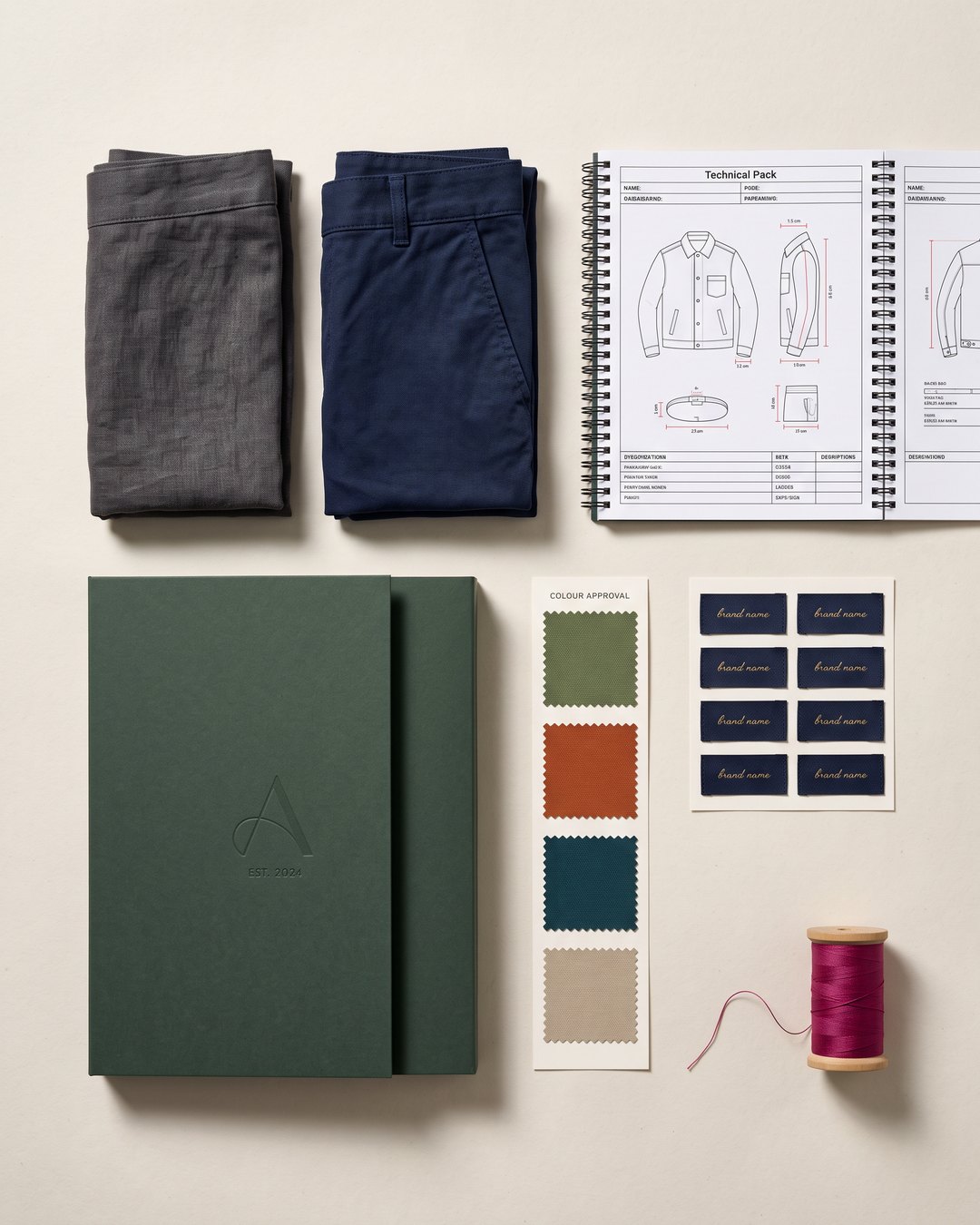
Three to five styles. Quality blanks or low-MOQ cut-and-sew. Real brand strategy and identity. Custom labels and packaging. A properly built ecommerce site. One campaign shoot.
Rough split: $5,000 to $8,000 on brand and site, $6,000 to $12,000 on product and production, $1,500 to $5,000 on photography and launch.
What you get: a brand that looks and feels considered, product you control, and enough margin to reinvest.
This is where most serious independent brands land, and it is the band Origin was built for.
Scenario three: the investment-ready launch
Total: $40,000 to $80,000+
Full cut-and-sew development. Six to ten styles across a coherent collection. Deep brand work including naming, identity system and full guidelines. Custom packaging. Hero campaign plus full ecommerce imagery. Paid launch budget.
Right for: founders with capital who are building for retail or raising, and established businesses launching a diffusion line where the brand has to hold up next to an existing one.
The costs nobody warns you about
These are the lines that turn a $15,000 plan into a $22,000 reality.
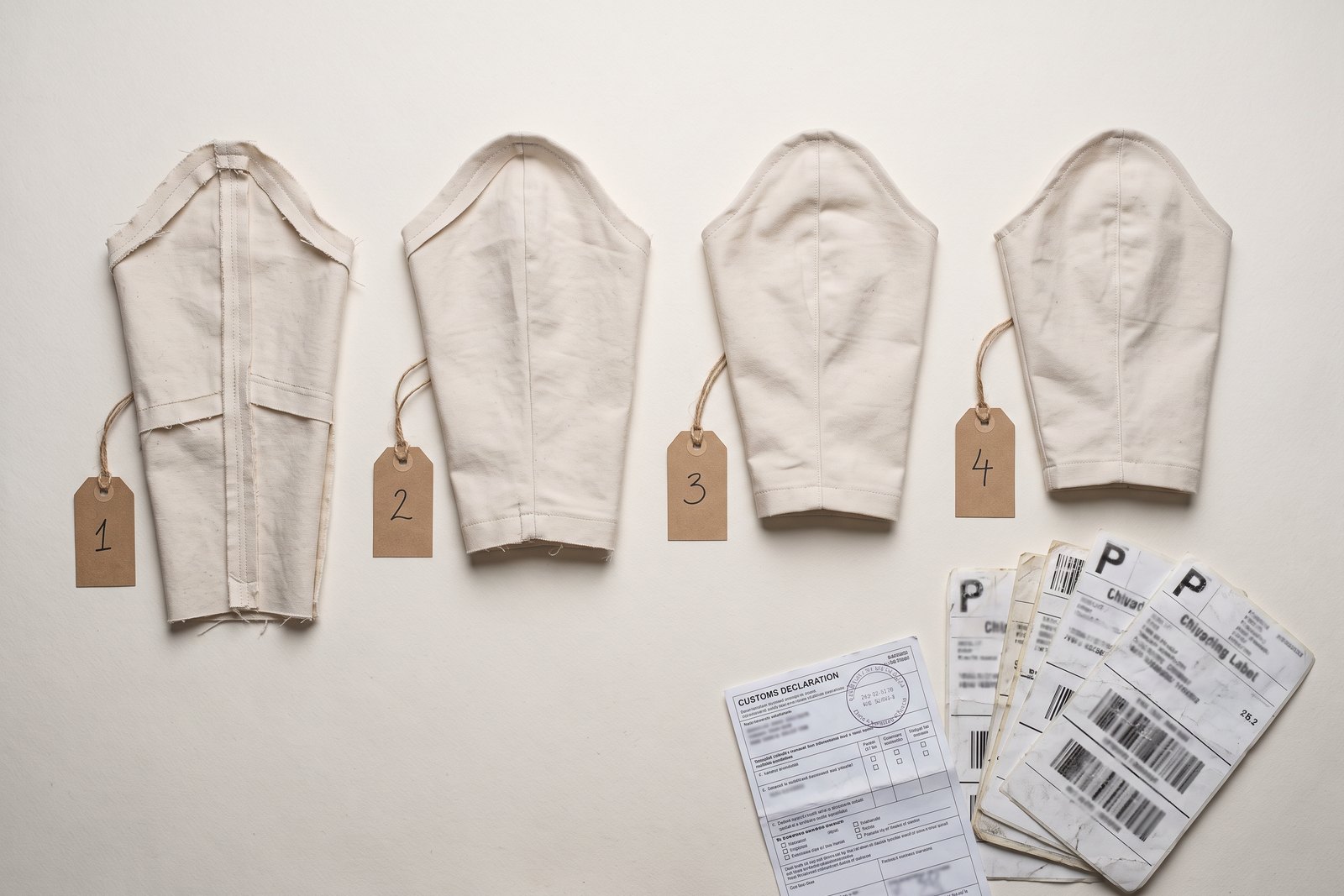
Sampling iterations. Almost every founder budgets for one round. Plan for two to four, at two to six weeks each. The first sample is almost never right. Getting a garment from tech pack to production-ready typically takes two to four months, and each round costs money and calendar time.
Shipping, duties and customs. Overseas manufacturing means freight, import duty and clearance fees on both samples and bulk. On a small first run this can add 15 to 25 percent to the landed cost. Sample shipping alone can run $150 to $350 per round.
Reshoots. Your first shoot will miss something. A colourway you did not photograph, a detail shot you need for the product page, a size you did not represent. Budget for a second, smaller round.
Returns and size exchanges. Fashion return rates run high, and higher for a new brand with no fit reputation. Every return costs you shipping both ways plus the handling.
The cash flow gap. The one that actually kills brands. Plan for roughly 18 months before the business reliably pays for itself. You pay the factory before you sell anything, and you will want to reorder your best seller before the first run has fully sold through.
What moves the number most
Four decisions account for most of the variance.
How you make it. Print-on-demand, blanks with your branding applied, or custom cut-and-sew. This single choice swings your budget by a factor of ten. Blanks are the sensible middle for most independent brands at launch: real quality, real branding, no factory minimums.
Minimum order quantities. A 50-piece MOQ and a 300-piece MOQ are completely different businesses. Ask about MOQ per style and per colourway before you fall in love with a factory.
Whether you already have an audience. A founder with 20,000 engaged followers can pre-sell and fund production from orders. A founder starting cold needs the full launch marketing budget. This is often the largest hidden variable.
How many styles you launch with. Every additional style multiplies tech packs, sampling, production minimums and photography. Launching with three considered pieces almost always beats launching with eight thin ones.
Where Origin sits
Origin is our 45-day brand launch system. It covers the brand side of the table above, not the manufacturing side. Three plans:
| Plan | Price | What it covers |
|---|---|---|
| Foundation | $3,500 | Brand strategy, customer research, positioning, naming, logo, typography system, colour palette, brand guidelines |
| Launch | $5,000 | Everything in Foundation plus ecommerce website, homepage copy, product page templates, mobile optimisation, email capture, social launch kit, packaging direction, launch checklist |
| Elevate | $7,500 | Everything in Launch plus hero campaign creative, AI campaign photography, product imagery, paid social creative, organic content package, 30-day launch optimisation |
What Origin does not include: garment manufacturing, sampling, fabric, production runs, freight or duties. You still need a factory and a production budget. Origin builds the brand that production sits inside.
Set against the table above, Foundation at $3,500 covers work that would cost $5,000 to $25,000 assembled from separate specialists, and takes 45 days instead of the 90-plus most founders spend coordinating eight vendors.
Who this is not for
If you have $500 and an idea for a print-on-demand tee, Origin is the wrong purchase. You do not need brand strategy yet. You need to find out whether anyone wants the thing.
Do this instead: pick one design, put it on quality blanks, post it, and see if strangers buy. Spend nothing on identity until someone who is not your friend has paid you. Come back when you know there is demand and you are ready to build something that lasts.
The same applies if your entire budget is the branding budget. A beautiful brand with no product and no production money is a portfolio piece, not a business. Split your capital before you spend any of it.
Frequently asked questions
How much does it cost to start a clothing brand in 2026?
Between $2,000 and $60,000. Print-on-demand starts near $2,000, a blanks-and-branding launch runs $8,000 to $15,000, and custom cut-and-sew with a real production run starts around $25,000. Manufacturing method is the biggest single variable.
Can I start a clothing brand with $1,000?
Yes, through print-on-demand, but with thin margins and no control over base product quality or packaging. Treat it as market validation rather than a brand launch, and reinvest early revenue into doing it properly.
How much should I spend on branding for a clothing line?
Roughly 20 to 30 percent of total launch budget. Below that and the brand cannot carry the product. Above it and you risk having nothing left to manufacture with. On a $15,000 launch, $3,000 to $5,000 on strategy and identity is a sensible allocation.
How long does it take to launch a fashion brand?
Typically 90 days or more when coordinated across separate vendors, driven mainly by sampling. Expect two to four sample rounds at two to six weeks each. Brand and ecommerce work can run in parallel with production, which is how a 45-day brand build is possible alongside a longer manufacturing timeline.
What is the biggest hidden cost when launching a clothing brand?
Sample iterations. Most founders budget for one round and need two to four. Add shipping and duties on every round, and it is routinely the line that breaks a first budget.
Do I need brand strategy before I design my first collection?
Yes, if you intend to build something durable. Strategy determines who you are designing for, what price you can hold and what the product needs to say. Designing first and positioning afterwards usually means redoing the product.
Is it cheaper to use print-on-demand or a manufacturer?
Print-on-demand is cheaper to start and more expensive per unit. Manufacturing costs more upfront and gives far better margins at volume. Print-on-demand suits validation. Manufacturing suits a brand with proven demand.
How much does a fashion brand identity cost?
$300 to $1,500 from a freelancer for a logo alone, $3,000 to $20,000 from an agency for a full identity system with guidelines. Origin Foundation covers strategy, naming and full identity at $3,500.
How long before a fashion brand becomes profitable?
Plan for around 18 months of cash flow before the business reliably funds itself. You pay production before you sell, and you will want to reorder best sellers before the first run clears.
What does Origin cost and what is included?
Origin has three plans: Foundation at $3,500 for strategy and identity, Launch at $5,000 adding an ecommerce site and launch kit, and Elevate at $7,500 adding campaign creative and 30-day launch optimisation. All are delivered in 45 days. Manufacturing is not included.
The bottom line
The number you should plan around is not the cheapest way to get a product made. It is the amount that lets you launch something you would not have to apologise for, and still have money left to reorder when it sells.
For most independent founders that is $12,000 to $25,000 all in. Less than that and something gets compromised. More than that and you are buying scale you have not yet earned.
Book a free 45-minute Brand Strategy Session and we will build you a real number for what you are making.
About Fashion NUT
Fashion NUT is a Fashion Intelligence Lab helping fashion and lifestyle brands build, launch and grow in the AI era. Founded by Tam Sood, it offers Origin, a 45-day brand launch system; Linea, creative production for product imagery, campaigns and video; Prompt Commerce, the methodology for AI discoverability; and Academy, practical AI workshops for fashion teams and schools.
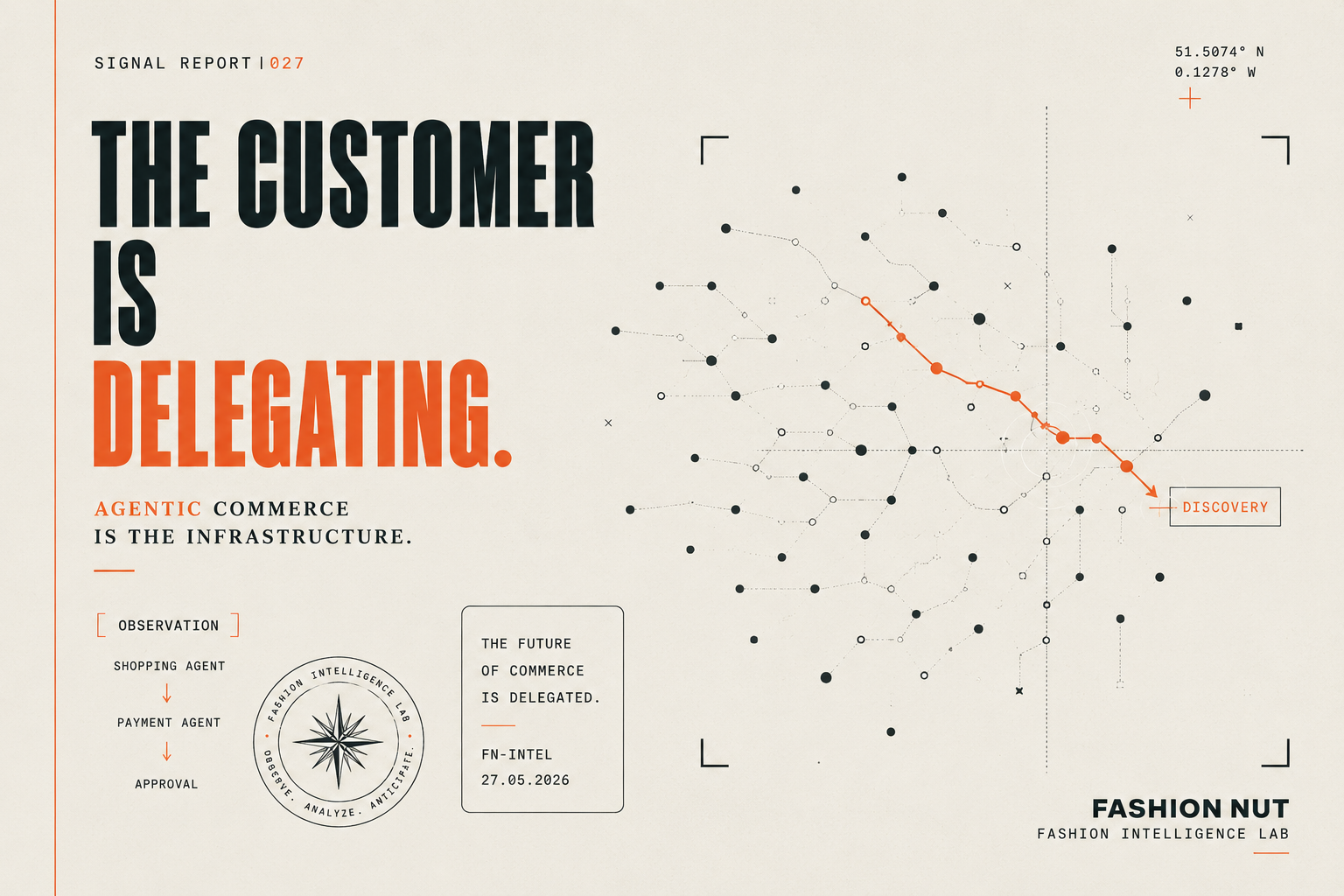
Fashion NUT Intelligence Report
Last Updated: June 2026
Executive Summary
For two decades, fashion discovery was dominated by search engines, social media feeds, marketplaces, and retail merchandising.
Consumers searched.
Brands optimized.
Retailers competed for visibility.
That model is beginning to change.
Artificial intelligence is introducing a new layer between shoppers and products. Instead of searching manually, consumers increasingly ask AI systems to research, compare, recommend, and eventually purchase products on their behalf.
This shift affects every fashion business.
It changes how products are discovered.
It changes how product information is structured.
It changes what makes brands visible.
And it changes how consumers make purchasing decisions.
Fashion brands that understand this transition early can build competitive advantages before AI-driven commerce becomes mainstream.
What Is AI-Powered Fashion Discovery?
AI-powered fashion discovery is the process of using artificial intelligence systems to help consumers find, compare, evaluate, and purchase fashion products through conversational interactions rather than traditional search and browsing.
Instead of typing keywords such as "black linen shirt men," consumers increasingly describe goals, occasions, budgets, preferences, body types, weather conditions, and styling requirements.
The AI performs the research.
The AI compares alternatives.
The AI presents recommendations.
Increasingly, the AI may facilitate transactions.
This represents one of the most significant shifts in fashion commerce since the rise of ecommerce itself.
The Evolution of Fashion Discovery
Fashion discovery has already gone through several major transitions.
Era One: Physical Discovery
For most of retail history, discovery happened through:
- Department stores
- Boutiques
- Magazines
- Window displays
- Word of mouth
Brands competed for shelf space and physical attention.
Era Two: Search Discovery
The rise of ecommerce introduced a new model.
Consumers searched.
Search engines ranked.
Retailers optimized.
The ability to appear in search results became a competitive advantage.
SEO became a billion-dollar industry.
Era Three: Social Discovery
Platforms such as Instagram, TikTok, Pinterest, and YouTube introduced algorithmic discovery.
Consumers no longer needed to search.
Products appeared in feeds.
Brands competed for attention.
Era Four: AI Discovery
AI introduces a new model.
Consumers describe intent.
AI interprets intent.
AI recommends products.
AI increasingly influences purchase decisions.
The recommendation layer becomes more important than the search layer.
Why Search Is Not Disappearing
Many discussions about AI assume search engines are dying.
That is unlikely.
Search remains valuable because consumers still need information.
Search remains valuable because consumers still want choice.
Search remains valuable because consumers still browse.
The change is not the disappearance of search.
The change is the rise of recommendation.
Fashion brands should think about AI as an additional discovery layer rather than a replacement for existing channels.
The Seven Behavioural Shifts Reshaping Fashion Commerce
Shift 1: Search Becomes Conversation
Consumers increasingly communicate goals rather than products.
Instead of:
"white sneakers"
Consumers ask:
"Find versatile white sneakers suitable for travel, everyday wear, and smart casual outfits under £150."
The information request becomes richer.
The recommendation becomes more precise.
Shift 2: Product Pages Become Knowledge Assets
Traditional product pages focused on conversion.
Future product pages increasingly support recommendation systems.
Strong product pages answer:
- Who is this product for?
- What occasions suit it?
- What weather conditions fit it?
- What products pair well with it?
- How does it fit compared to alternatives?
The product page becomes structured knowledge.
Shift 3: AI Becomes The First Stylist
Consumers increasingly use AI to:
- Build outfits
- Plan wardrobes
- Discover brands
- Compare products
- Receive styling advice
The first interaction may happen with an AI system rather than a retailer.
Shift 4: Reviews Become Recommendation Signals
Reviews have always influenced purchases.
AI systems make reviews even more important.
Large volumes of customer feedback help AI systems understand:
- Fit
- Quality
- Durability
- Comfort
- Use cases
Reviews become machine-readable trust signals.
Shift 5: Discovery Moves Upstream
Traditional ecommerce discovery often happened on retailer websites.
AI discovery increasingly happens before consumers visit websites.
The decision process starts earlier.
Recommendation systems influence outcomes before brand interactions occur.
Shift 6: Product Data Becomes A Competitive Advantage
Many brands still treat product data as operational information.
AI systems treat product data as intelligence.
Rich attributes improve understanding.
Poor attributes reduce visibility.
The quality of product information increasingly affects discoverability.
Shift 7: Commerce Becomes Agent-Assisted
The next stage of ecommerce is agent-assisted purchasing.
Consumers describe needs.
AI agents research products.
AI agents compare alternatives.
AI agents recommend purchases.
The shopping journey becomes dramatically shorter.
Search vs AI Discovery
Fashion brands often assume AI discovery works similarly to traditional SEO.
The reality is more nuanced.
Traditional search rewards relevance.
AI recommendation rewards understanding.
Brands must optimize for both environments simultaneously.
The strongest businesses will combine:
- SEO
- Brand building
- Product intelligence
- Structured data
- Customer trust signals
rather than relying on a single channel.
What Fashion Brands Should Do Today
Improve Product Intelligence
Expand:
- Materials
- Fit guidance
- Styling recommendations
- Care instructions
- Product specifications
Increase Review Coverage
Collect:
- Product reviews
- Fit reviews
- Size feedback
- Customer photos
Strengthen Structured Data
Ensure product information is:
- Consistent
- Detailed
- Machine-readable
Monitor AI Visibility
Track how AI systems describe:
- Products
- Categories
- Brands
Build Authority
Publish:
- Research
- Case studies
- Expert analysis
- Original insights
Authority increasingly influences recommendation systems.
The Future of Fashion Discovery
Fashion discovery is entering a period of transition.
Consumers will continue using search engines.
Consumers will continue browsing websites.
Consumers will continue following influencers.
But AI recommendation systems are becoming a new layer within the discovery ecosystem.
The brands that succeed over the next decade will not simply be the brands that are easiest to find.
They will be the brands that are easiest to understand.
Frequently Asked Questions
What is AI-powered fashion discovery?
AI-powered fashion discovery uses artificial intelligence systems to help consumers find, compare, and evaluate fashion products through conversational interactions rather than traditional keyword searches.
How does AI affect fashion ecommerce?
AI affects fashion ecommerce by influencing product discovery, recommendations, personalization, styling advice, customer support, and increasingly the purchasing process itself.
What is agentic commerce?
Agentic commerce refers to AI systems that can research, compare, recommend, and eventually purchase products on behalf of consumers.
Will AI replace fashion search?
AI is unlikely to replace search entirely. Instead, AI adds a recommendation layer that complements traditional search behaviour.
Why is product data important for AI shopping?
AI systems rely on product data to understand products accurately. Detailed attributes, specifications, and contextual information improve recommendation quality.
How do AI systems recommend fashion products?
AI systems evaluate product information, reviews, customer preferences, context, pricing, and other signals to generate recommendations.
What is conversational commerce?
Conversational commerce allows consumers to discover and purchase products through natural language interactions with AI systems.
How can fashion brands prepare for AI commerce?
Fashion brands should improve product information, strengthen structured data, collect reviews, monitor AI visibility, and invest in authority-building content.
Will AI change fashion marketing?
AI will influence marketing, but the larger impact may be on product discovery and recommendation rather than advertising alone.
What is the biggest opportunity for fashion brands?
The biggest opportunity is becoming highly understandable to recommendation systems before AI-driven discovery becomes mainstream.
Download our latest Fashion Intelligence Report.
Quarterly insights into fashion, ecommerce and AI.
Download Report →Join thousands of fashion founders.
One email every week. Original thinking.
No fluff. Just ideas worth stealing.
Build better brands.
Read the Journal. Explore new ideas. Then build something remarkable.